Showing posts with label Prevention Devices. Show all posts

Friday, December 19, 2014

Flooding Alarms: More Than An Ounce Of Prevention
Flooding Alarms
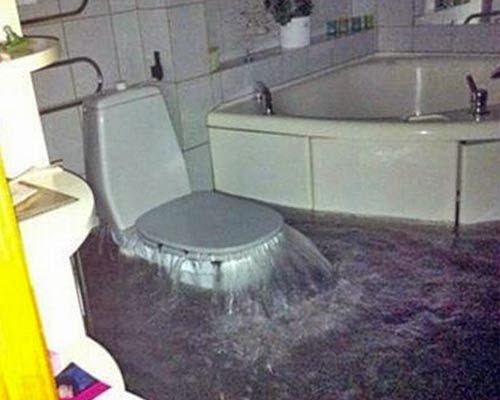
When people think of flood damage, they commonly think of damage caused by torrential rains flooding neighborhoods. While that is certainly a concern for many homeowners, there is another cause for flooding that nearly every homeowner needs to be prepared for. That is flooding that is caused by malfunctioning appliances, especially water heaters.

Every year, thousands of people have to deal with the consequences of a broken appliance. In addition to a huge mess, those consequences include water damage and the costs of repairs and cleaning. In some cases, that damage runs into the thousands of dollars. This is especially true if the flooding occurs when you are away from your home for an extended period of time, such as a vacation.

While insurance is good to have, there is something else you should invest in: a flood sensor. Flood sensors basically do exactly what their name suggests: they detect flooding and notify you when one occurs.

Flood sensors come in two broad categories: alarms and alarms plus water shutoff. Alarms are the simplest and least expensive safety measure. You can buy very simple stand-alone systems that function much like smoke detectors. When they sense flooding, they trigger an audible alarm. You can get one for under $15.

Of course, such a simple an inexpensive system is only effective if you are within hearing range of the alarm. More complex systems will send messages to your mobile phone. There are also systems that use a central panel that monitors multiple sensors-such as ones near water heaters, clothes washers, dishwashers, etc.

Another option becoming more commonly available is including flood sensors in your home security system. If you are already paying a monitoring fee for home security (or will be), this may be the most cost-effective solution.

The other type of systems are those that will stop the flow of water when a sensor is triggered. These systems are more expensive, but they have the added advantage of preventing excessive damage. If the dishwasher overflows while you are home, you may notice it in time to turn it off and prevent much damage. However, if your water heater or washing machine breaks and starts flooding while you are away for the weekend, then that could mean hundreds of gallons of water flooding your home.

Every day, homes are damaged by flooding brought on not by Mother Nature, but by defective appliances. Flood sensors cannot stop the damage entirely, but they can notify you of an emergency and even turn off the water to minimize damage. When it comes to stemming the tide of flood damage, every second matters. Every second is money.

Considering how inexpensive they are, they make very good insurance investments.


By Jill Manty 
Article Source: http://EzineArticles.com/7761562
Monday, November 17, 2014


Have you ever experienced water contamination in your home due to wastewater reversal? I hope not. Backflows are among the most annoying, most inconvenient and the most harmful of all plumbing emergencies that you have to watch out for. You see, while we may get totally irritated at not being able to use our supposedly potable drinking water, we should not forget that ingestion is the bigger problem. What if a loved one accidentally drinks that toxic water? What if it's your kid who intakes that foul-smelling, bacteria infested liquid? Backflows may cause more harm than what you thought it could. And that it is why we need backflow prevention devices.

What causes backflows?

Backflows are the reversal of the unfavorable substances in your drainage system including gasses, sewage, industrial wastes and other harmful liquids and / or elements. They result from the cross-connection in your plumbing system specifically when pressure changes. For example, you might be doing some gardening and have a bucket of herbicide ready for your plants. You decide to water your greens and while you are doing the task, your spouse calls you and because you're in a hurry to get inside, you accidentally put the end of the hose into the bucket. You forget that it's not supposed to be put in there. The hose creates some kind of suction effect and siphons some herbicide into the system. The liquid then travels from the tube into your tap and straight to your water lines, contaminating your clean water. That's one example of a backflow occurrence. Now what you have to remember is that since there are a lot of cross-connections in your plumbing, backflows may actually happen anytime --- if you don't have a preventer installed.

What are backflow prevention devices?

Backflow prevention devices protect your clean water lines from contamination that result from the reversal of undesirable liquid and other substances into the system. Its main function is to maintain a specific amount of pressure so that in case of a plumbing emergency such as pipe bursting or freezing, wastewater won't travel back to your potable water supplies. It most cases, backflow preventers create air gaps in the system to accomplish what they are tasked to do. Air gaps are open spaces found between a valve or fixture and a place where water can accumulate or pool. Because of the air gap, pressure is maintained and soiled water is restricted from backing up.

Are there types of backflow preventers?

Yes, there are several types of backflow preventers. We have the pressure vacuum breaker or PVB; the double check assembly or DCA; the reduced pressure zone or RPZ and the atmospheric vacuum breaker or AVB. The first three are installed just right after the isolation valve while the last one (AVB) is installed after the zone control valve, specifically on each of the sprinkler system zone.


By Diane Louise Villanueva  
Article Source: http://EzineArticles.com/8810407
Subscribe to RSS Feed Follow me on Twitter!